
Lucid EV Growth Forecasts Slashed as Company Misses Production Target
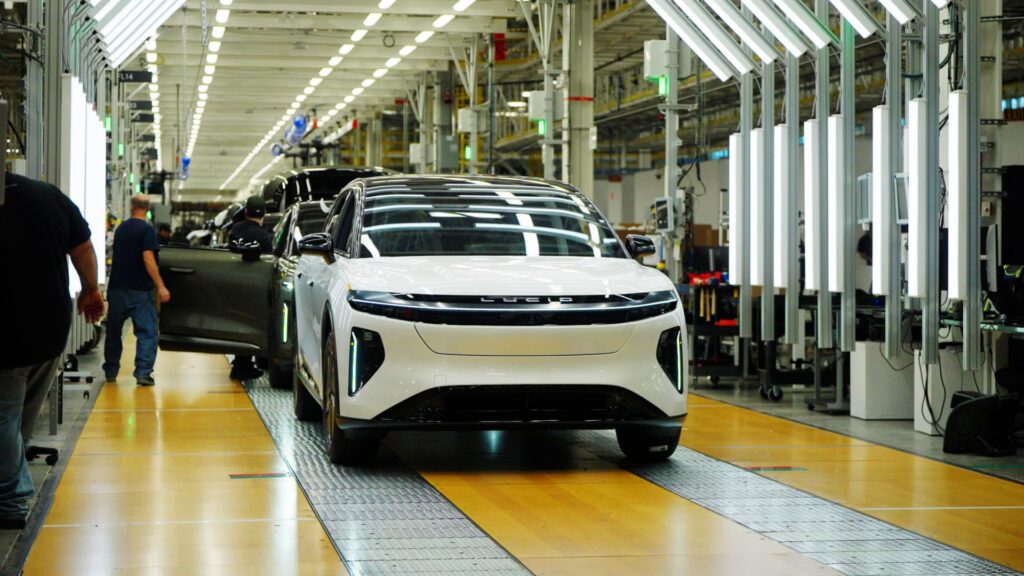
Lucid EV growth has been a beacon of hope for the struggling electric vehicle manufacturer, but its latest financial report has cast a shadow over the company’s future prospects. The San Jose-based startup announced a production target of between 25,000 and 27,000 units for 2026, a roughly 40% to 51% increase compared with last year. However, the company’s disappointing performance in meeting this target has sent shockwaves through the industry, causing analysts to slash its growth forecasts.
Lucid EV Growth: A Key Driver of Disappointment
Lucid EV growth was expected to be a key driver of the company’s success, but it appears that the startup struggled to meet the lofty targets set for itself. The production shortfall has raised concerns about the company’s ability to scale up production and meet demand for its vehicles. Lucid’s CEO, Peter Rawlinson, had touted the company’s growth prospects, citing strong demand for its luxury electric vehicles. However, it seems that the reality on the ground did not match the expectations set by management.
The production target of 25,000 to 27,000 units was seen as ambitious even before the company announced the numbers. While the industry has been trending towards electrification, there are only so many consumers willing and able to purchase high-end electric vehicles. Lucid’s production shortfall has highlighted the challenges faced by many startups in the EV space, including scaling up production while maintaining quality and meeting demand.
Financial Results: A Mixed Bag
Lucid’s financial results for 2025 were a mixed bag. The company reported a net loss of $1.3 billion, significantly wider than the analyst consensus estimate of a loss of $500 million. Revenue was also lower than expected, at $2.5 billion compared to the consensus estimate of $4.2 billion.
Despite these disappointing results, Lucid’s revenue did show some signs of growth, up 20% year-over-year. This suggests that the company is gaining traction in the market, but it remains to be seen whether this will translate into higher profits in the future.
Lucid EV Growth: What’s Next?
The production shortfall and disappointing financial results have raised questions about Lucid’s ability to achieve its growth targets. The company has been investing heavily in expanding its manufacturing capacity, including a new facility in Casa Grande, Arizona. However, it remains to be seen whether this will be enough to meet demand for its vehicles.
Analysts have already begun slashing their growth forecasts for Lucid, with many now expecting the company’s production target for 2026 to be revised downwards. This would represent a significant decline from the original target of 25,000 to 27,000 units. While it is impossible to predict exactly what will happen in the future, it is clear that Lucid faces significant challenges ahead.
In conclusion, Lucid EV growth has been a key driver of disappointment for the company. The production shortfall and disappointing financial results have raised questions about the company’s ability to achieve its growth targets. As the industry continues to evolve, it will be interesting to see how Lucid responds to these challenges and whether it can regain its footing in the market.
The Future of Lucid EV Growth: Lessons Learned from Disappointment
Lucid’s disappointing production numbers and financial results have sent shockwaves through the industry, leaving many to wonder what went wrong. As the company navigates this challenging period, it is essential to examine the factors that contributed to its struggles and explore potential solutions for future growth.
One key area of focus is the scalability of Lucid’s manufacturing capacity. The new facility in Casa Grande, Arizona, marks a significant investment in expanding production capabilities. However, it remains to be seen whether this will be enough to meet demand for its vehicles. The company’s production target for 2026 was ambitious, but it appears that the reality on the ground did not match the expectations set by management.
Lucid EV growth has been a beacon of hope for the struggling electric vehicle manufacturer, but its latest financial report has cast a shadow over the company’s future prospects. To achieve sustained growth, Lucid must address these scaling challenges and develop more effective strategies to manage production capacity.
A critical aspect of Lucid’s strategy is its focus on luxury electric vehicles. While this approach may have resonated with some consumers, it also presents significant challenges in terms of production costs and scalability. The company must balance the need for high-end features and performance with the realities of mass-producing EVs.
Another key area of consideration is Lucid’s supply chain management. The company has faced criticism for its reliance on a limited number of suppliers, which can make it vulnerable to disruptions in production. To mitigate this risk, Lucid must work to diversify its supplier base and develop more robust contingency plans for managing supply chain challenges.
Lucid EV growth also requires a deep understanding of the evolving automotive landscape. The industry is rapidly shifting towards electrification, with consumers increasingly prioritizing sustainability and environmental responsibility. Lucid must stay attuned to these changing consumer preferences and adapt its products and marketing strategies accordingly.
The company’s recent financial results highlighted the importance of careful cash management. Lucid’s net loss of $1.3 billion was significantly wider than expected, suggesting that the company may need to reconsider its funding strategy in the near term. This could involve securing additional investment or exploring alternative funding options to support its growth plans.
Looking ahead, Lucid faces significant challenges in achieving its growth targets. However, by examining the factors that contributed to its struggles and addressing these challenges head-on, the company can begin to rebuild momentum and drive sustainable growth. The key to success lies in developing a more nuanced understanding of the automotive market and adapting Lucid’s products and strategies to meet evolving consumer demands.
The concept of “lucid ev growth” – or the process of achieving accelerated growth in electric vehicle production – is crucial to Lucid’s future prospects. By prioritizing scalability, diversifying its supply chain, and staying attuned to changing consumer preferences, Lucid can begin to regain its footing in the market and drive sustained growth.
Ultimately, Lucid EV growth will require a multifaceted approach that addresses both the technical and strategic challenges facing the company. By embracing a culture of innovation, investing in research and development, and fostering strong partnerships with suppliers and stakeholders, Lucid can position itself for long-term success in the rapidly evolving automotive industry.