
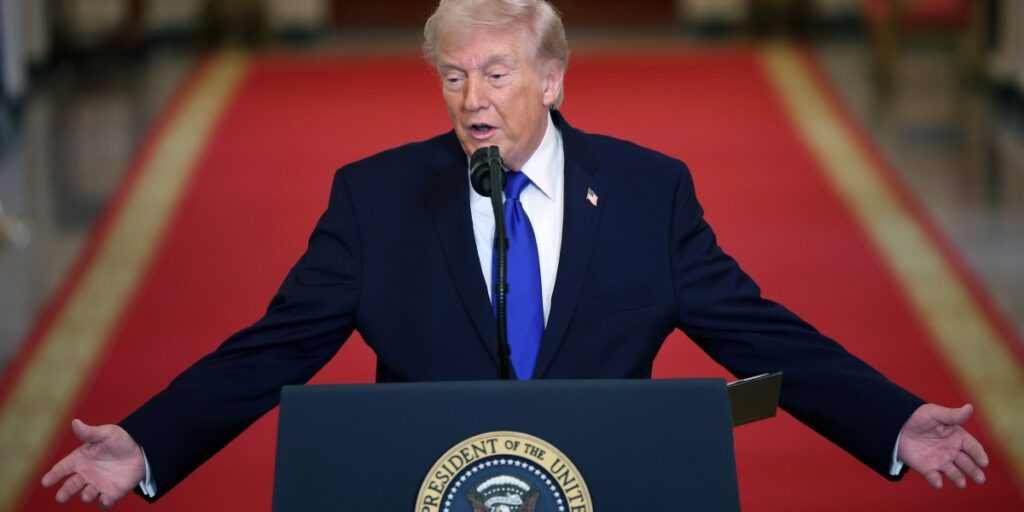
Trump Tariff Refund Demands Gain Steam
As the Trump administration’s trade policies continue to take a toll on American consumers, two retail customers have taken matters into their own hands, filing proposed class-action lawsuits in U.S. courts to demand refunds for tariffs imposed on imported goods.
The proposed lawsuits, which are still in the early stages, aim to hold accountable the Trump administration’s decision to impose steep tariffs on billions of dollars’ worth of Chinese and Mexican imports, leading to increased prices for consumers. The plaintiffs argue that the tariffs have caused significant financial hardship and inconvenience, particularly for small businesses and individuals who rely on imported goods.
The first proposed class-action lawsuit was filed last month by a group of consumers in the Eastern District of New York, who claim to have been affected by the tariffs imposed on Chinese-made electronics. The plaintiffs allege that they were forced to pay higher prices for their electronic devices, resulting in significant financial losses and diminished purchasing power.
Similarly, a group of retail customers in the Southern District of California filed a proposed class-action lawsuit last week, which targets the tariffs imposed on Mexican-made goods such as clothing and textiles. The plaintiffs argue that the tariffs have led to increased prices at the checkout line, causing them to spend more money than they had intended to.
The proposed lawsuits highlight the growing discontent among American consumers with the Trump administration’s trade policies, particularly with regards to the tariffs imposed on imported goods. Many argue that the tariffs are a form of protectionism that disproportionately benefits large corporations and wealthy elites, while harming small businesses and individuals who rely on imports.
Trump Tariff Refund: A Growing Concern for Consumers
As the lawsuits gain momentum, consumer advocates and lawmakers are starting to take notice. “The Trump tariff refund demands are a clear indication that American consumers are finally speaking out against the administration’s unfair trade policies,” said a spokesperson for the Consumer Federation of America. “It’s time for the government to take action and provide relief to consumers who have been hurt by these tariffs.”
Lawmakers in both parties are also starting to get involved, with some calling for legislation that would allow consumers to seek refunds for tariffs imposed on imported goods. “This is a clear case of unfair trade practices,” said Senator Ron Wyden (D-OR), a leading critic of the Trump administration’s trade policies. “We need to take action to protect American consumers and ensure that they are not unfairly penalized by these tariffs.”
The Impact of Tariffs on Small Businesses
The impact of tariffs on small businesses has been particularly severe, with many struggling to stay afloat in the face of increased costs and reduced demand. According to a recent survey by the National Federation of Independent Business, over 70% of small businesses reported feeling the negative effects of the Trump administration’s trade policies.
Related: Learn more about this topic.
“The tariffs have made it impossible for us to compete with foreign imports,” said Sarah Johnson, owner of a small clothing store in Los Angeles. “We’ve had to raise our prices, which has hurt our sales and reduced our profit margins. It’s like we’re being squeezed by both ends.”
Trump Tariff Refund: A Potential Game-Changer
The proposed lawsuits could potentially provide a major breakthrough for consumer advocates and lawmakers seeking to hold the Trump administration accountable for its trade policies. If successful, the lawsuits could lead to significant refunds for consumers who have been affected by the tariffs.
“This is a critical moment in the fight against unfair trade practices,” said Rachel Weinberg, a consumer advocate with the National Consumer Law Center. “If we can show that the government has engaged in discriminatory and unfair trade practices, it could set a major precedent for future cases.”